
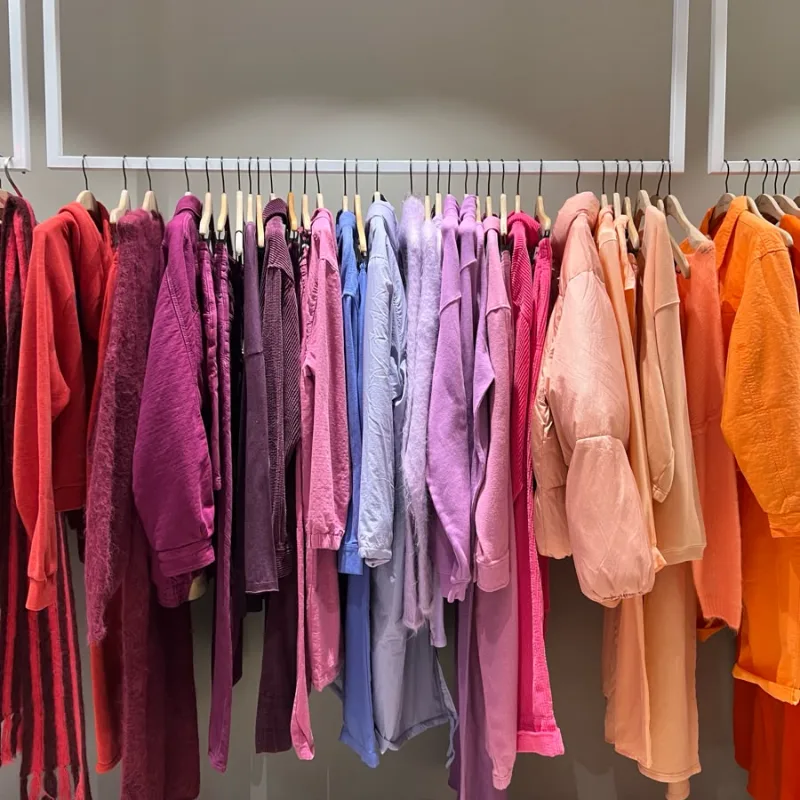
Styling is not a talent you are born with. It is a set of small decisions, and every one of them has a rule you can learn in ten minutes. The woman who always looks put together does not have magical taste — she has a system, and she repeats it every morning without thinking about it.
This guide is that system, written down.
First: what is an “outfit”?
An outfit is not one nice piece. It is five slots, each doing a different job:
| Slot | What it does |
|---|---|
| Top | Noticed first, because it sits closest to your face |
| Bottom | Sets the shape of the whole outfit from across a room |
| Shoes | Decide how formal the outfit reads, more than anything else |
| Bag | Balances volume and carries colour |
| Layer | A jacket, blazer or abaya — turns simple into finished |
Most outfits that don’t work fail because one slot got filled without thinking. Good trousers, good shirt, and then whatever trainers were by the door — and it becomes half an outfit.
You don’t have to fill all five every time. You do have to know you left one empty on purpose rather than by accident.
1. Start from one piece, not from nothing
The biggest mistake is opening the wardrobe and asking “what should I wear?” That question is far too big, and answering it takes half an hour.
Replace it with a smaller one: “which piece do I want to wear today?”
Pick one — trousers, a dress, a jacket, anything — and make it your anchor piece. Every decision after that gets easy, because it is no longer a choice among thirty things. It is a choice among the things that go with one known piece.
Your anchor is usually:
- Something you love wearing — if you don’t love it, the whole outfit will feel wrong
- Or something the occasion dictates — work, a wedding, travel
2. The three-colour rule
The rule is simpler than you’d expect: three colours in one outfit, no more. Shoes, bag and accessories all count.
The distribution that reliably works:
- A base colour — covers the largest area, usually the bottom or the layer
- A second colour — the top, or whatever sits under the layer
- An accent — the bag, the shoes, or one accessory
Neutrals don’t count as strictly
Black, white, beige, grey and denim act like empty space for the eye. You can put two of them together and still have room for one strong colour.
So: black trousers + white shirt + red bag reads as clean, not as three colours fighting.
Similar colours are easier than opposites
If you don’t yet know what goes with what, start with colours from the same family: light beige with brown, or pale blue with navy. It’s called tonal dressing, and it’s the easiest way to get a combination right with no experience.
3. Balancing proportion
This is the rule that separates an outfit that looks nice from one that looks considered:
If the top is loose, keep the bottom narrower. If the bottom is loose, keep the top narrower.
Loose on top and loose on the bottom hides your shape entirely and makes the outfit look larger than you are. Fitted on top and fitted on the bottom reads as gym clothes rather than as style.
Combinations that always work:
- Oversized shirt + straight trousers — the classic that never fails
- Fitted top + wide-leg trousers — the most photogenic outfit there is
- Loose dress + cropped jacket — the jacket marks the waist without a belt
Length matters as much as width
A shorter top raises the waist visually and makes legs look longer. A longer one does the opposite. Neither is better — just know what each one is doing.
4. One focal point
Every outfit needs one thing that draws the eye. One, not three.
If the jacket is a strong colour, keep everything else quiet. If the shoes are the statement, you don’t need a statement bag with them. If the piece itself is patterned, keep the accessories plain.
The reason is simple: the eye needs somewhere to rest. If everything shouts, nothing is heard.
If you remember only one rule from this guide, make it this one. It improves outfits immediately.
5. Fabric and texture
Not all contrast is colour. An outfit in a single colour can be striking if the fabrics differ:
- Cotton with silk — everyday against soft
- Denim with wool — rough against warm
- Leather with cotton — hard against plain
This is the trick that makes a simple outfit look deliberate. One colour, two textures — depth without complication.
6. One outfit, three occasions
Take black wide-leg trousers and a white shirt. Same two pieces:
For work
Add a blazer, closed shoes and a medium bag. Shirt fully tucked.
For going out
Lose the blazer, undo a button or two, tuck the shirt on one side only, and change to something comfortable on your feet. Add one gold accessory.
For the evening
The same shirt with heels, a small bag and a darker lip. Finish with a leather jacket if the weather allows.
Same two pieces. Three outfits. That difference is what method buys you.
7. Common mistakes
- Buying with no plan. If you can’t say what you’ll wear a piece with before you buy it, it will probably stay in the wardrobe. This is the single largest source of unworn clothes.
- Relying on pieces that need an occasion. A dress worn once a year is not an investment.
- Ignoring shoes. They decide whether an outfit reads as formal more than anything else does.
- Everything new at once. An outfit where every piece is new looks like a shop window, not like a person.
- The wrong size. A cheap piece that fits looks better than an expensive piece that doesn’t. Every time.
8. Ten outfits is enough
You don’t need thirty combinations. You need ten you know well.
Sit down once, try ten outfits from what you already own, and photograph each one. After that, mornings stop being an open question and become a list.
That is exactly the idea behind the “Style me” tab in Kantur: you build the outfit from the pieces already in your wardrobe, save it, and come back to it when you need it.
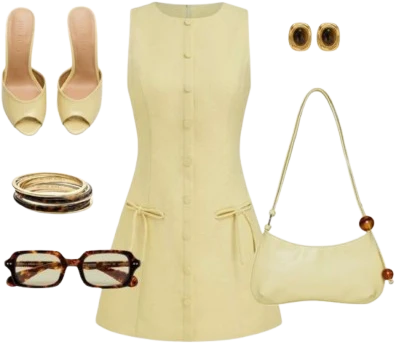
A quick checklist
Before you leave, ask yourself five questions:
- The five slots — is each one deliberate?
- Colours — three or fewer?
- Proportion — loose against fitted, not both the same?
- Focal point — only one?
- Shoes — right for where you’re going?
Five questions, ten seconds. That’s the whole difference.
Frequently asked
What colours go together?
The three easiest combinations: colours from the same family (beige with brown), one strong colour with a neutral (red with black), and two neutrals plus an accent (white and denim with a coloured bag). If you’re unsure, start with the second — it doesn’t fail.
How many pieces do I actually need?
The number isn’t what matters — how many pieces work with each other is. Twenty things that combine beat sixty where each one needs something you don’t own. The real measure is how many complete outfits you can build, not how many items are hanging up.
How do I know an outfit works before I leave?
Look in a full-length mirror, then take two steps back. Most mistakes are invisible up close and obvious from the distance people actually see you at. Photograph yourself too — a camera reads proportion more honestly than a mirror does.
Do my bag and shoes have to match?
No. That rule outlived its usefulness. What matters is that both belong to the same level of formality — trainers with an evening bag reads as wrong far faster than a colour mismatch ever will.
What should I do with pieces I never wear?
Give each one a single try in three different outfits. If it doesn’t work in any of them, it isn’t your piece — that’s the garment’s problem, not yours. Sell it or pass it on, and let the wardrobe breathe.
In short: style is not owning more clothes, it is repeating well. The women who always look put together don’t have bigger wardrobes — they have a system, and now you have the same one.